
What Building Owners Should Know Before Relocating Fire Sprinkler Heads
Updated: Aug 13

Commercial renovations often involve moving walls, installing new ceilings, upgrading lighting, or changing the layout of a workspace. While these improvements may seem straightforward, relocating fire sprinkler heads is not simply a matter of moving piping to match a new design. Fire sprinkler systems are carefully engineered, and even small changes to sprinkler locations can affect water distribution, fire control, and overall system performance.
For commercial property owners, facility managers, contractors, and building managers throughout South Florida, understanding when and why fire sprinkler head relocation may be required can help support safe renovations, avoid costly project delays, and maintain compliance with applicable fire protection requirements.
Quick Answer
Fire sprinkler heads should only be relocated after a professional evaluation because their placement is based on engineered fire protection principles. Moving sprinkler heads without reviewing the overall system can affect water distribution, sprinkler spacing, activation performance, and compliance with applicable fire protection requirements.
Why Fire Sprinkler Head Locations Matter
Every fire sprinkler head is installed as part of a coordinated system designed to protect a specific area of a building.
Its location is determined by factors such as:
Building occupancy
Hazard classification
Ceiling configuration
Room dimensions
Water distribution
Sprinkler spacing
Structural features
Mechanical systems
Changing the position of a sprinkler head may affect how the active fire sprinkler system performs during a fire.
Common Reasons Fire Sprinkler Heads Are Relocated
Sprinkler head relocation is often considered during commercial improvement projects.
Common examples include:
Office renovations
Tenant improvements
Ceiling replacements
Interior wall construction
Open office reconfigurations
Retail remodeling
Healthcare facility upgrades
Restaurant renovations
Warehouse modifications
Installation of new lighting or HVAC systems
Whenever these projects alter the building layout, the sprinkler system should also be reviewed.
How Relocating Sprinkler Heads Can Affect Fire Protection
Changes to Water Distribution
Each sprinkler head distributes water across a specific coverage area. Moving a sprinkler may create:
Gaps in protection
Uneven water distribution
Overlapping coverage
Areas that receive insufficient water
Proper placement helps ensure water reaches the intended portions of the building.
Changes to Sprinkler Spacing
Fire sprinkler systems are designed with specific spacing between sprinkler heads. Relocating one sprinkler may affect the spacing of several others, making a review of the surrounding area necessary.
Obstructed Discharge Patterns
After relocation, sprinkler discharge should remain free from obstructions. Potential obstructions include:
Decorative ceiling features
HVAC ductwork
Light fixtures
Structural beams
Cable trays
Storage systems
Any obstruction may lead to obstructed fire sprinkler discharge patterns that reduce the sprinkler's ability to distribute water effectively.
Heat Collection and Activation
Fire sprinklers activate when heat reaches the heat-sensitive element. Moving a sprinkler closer to soffits, beams, or other ceiling features may change how heat collects around the sprinkler and affect its response during a fire.
Fire Sprinkler Orientations and Relocation Considerations
Different sprinkler orientations require different installation approaches.
Pendent Sprinklers
Pendent sprinklers extend below the piping and discharge water downward.
Typical Applications: Offices, retail stores, schools, healthcare facilities
Relocation Considerations: Changes to ceiling height, lighting, or suspended ceilings may require sprinkler relocation to maintain proper coverage. Standard pendent sprinklers should not be installed on dry pipe systems because trapped water may freeze and obstruct water flow.
Upright Sprinklers
Upright sprinklers are installed above the piping and direct water upward into the deflector.
Typical Applications: Warehouses, manufacturing facilities, mechanical rooms
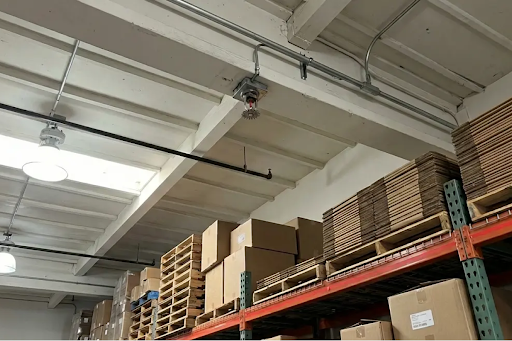
Relocation Considerations: Structural members, overhead utilities, and storage arrangements should not interfere with water distribution.
Sidewall Sprinklers
Sidewall sprinklers discharge water horizontally from wall-mounted positions.
Typical Applications: Hallways, hotels, office suites
Relocation Considerations: New cabinetry, partitions, or furnishings should not obstruct the spray pattern.
Recessed Sprinklers
Recessed sprinklers are partially installed within finished ceilings.
Relocation Considerations: Renovations should maintain proper sprinkler positioning and approved escutcheon installation.
Concealed Sprinklers
Concealed sprinklers remain hidden behind manufacturer-approved cover plates.
Relocation Considerations: Only approved cover plates should be used, and ceiling renovations should not interfere with sprinkler operation.
Response Time and Temperature Ratings Still Matter
Relocating a sprinkler head is more than changing its physical location.
The replacement sprinkler should continue to match the original system design, including:
Response type
Response Time Index (RTI)
Temperature rating
Orientation
Operating characteristics
Installing an incorrect sprinkler model can affect system performance and compliance.
Comparison Table: Renovation Changes and Their Potential Impact on Fire Sprinklers
Building Modification | Potential Impact on Fire Sprinklers | Why a Professional Review Is Important |
New suspended ceiling | May require sprinkler relocation | Maintains proper coverage below the ceiling |
Interior wall construction | Changes protected areas | Verifies sprinkler spacing and water distribution |
Lighting upgrades | May obstruct sprinkler discharge | Confirms adequate clearance around sprinklers |
HVAC installation | Can affect spray patterns | Evaluates potential obstructions through obstruction investigations |
Office reconfiguration | Alters room layout | Reviews sprinkler placement for the new space |
Warehouse shelving changes | May affect discharge and coverage | Helps maintain effective fire protection for high pile storage |
Signs Your Fire Sprinkler System Should Be Evaluated
Arrange a professional evaluation if:
Interior renovations are planned.
Ceiling heights are changing.
New walls are being installed.
HVAC or lighting systems are being relocated.
Large equipment is being added.
Occupancy changes are occurring.
Fire marshal inspections identify deficiencies.
Sprinkler heads appear obstructed after remodeling.
Common Problems Found During Renovation Projects
Routine inspections often identify:
Sprinkler heads installed in incorrect locations
Obstructed discharge patterns
Improper sprinkler spacing
Ceiling features blocking water distribution
Sprinklers hidden by architectural elements
Painted sprinkler heads or damaged components
Unauthorized system modifications
Identifying these issues early helps reduce delays and supports reliable fire protection.
Compliance Requirements
Commercial fire sprinkler systems should be reviewed whenever significant building renovations are made in accordance with applicable fire protection requirements, including:
Florida Fire Code
Local fire marshal inspection requirements
Coordinating fire sprinkler work during the planning phase of a renovation can help avoid construction delays and reduce the need for rework.
Common Mistakes to Avoid
Moving Sprinkler Heads to Match a New Ceiling Layout
Sprinkler locations should be determined by fire protection design, not aesthetics alone.
Assuming One Relocated Sprinkler Has No Effect on the Rest of the System
Changing one sprinkler location can influence surrounding coverage and spacing.
Ignoring New Obstructions
Lighting, ductwork, signage, and architectural features should not interfere with sprinkler discharge.
Installing the Wrong Replacement Sprinkler
Replacement sprinkler heads should match the system's approved design, including orientation, response type, and temperature rating.
Waiting Until Construction Is Finished
Reviewing the fire sprinkler system during the design phase of a renovation is often more efficient than making corrections after construction is complete.
When to Contact a Fire Sprinkler Professional
Professional guidance is recommended when:
Interior renovations are being planned.
Fire sprinkler heads need to be relocated.
Ceiling layouts are changing.
New partitions or walls are being added.
Occupancy changes are occurring.
Fire marshal deficiencies have been identified.
Questions arise regarding sprinkler placement or compliance.
A licensed fire sprinkler contractor can evaluate the existing system, determine whether sprinkler relocation is necessary, and help ensure the modified system continues to provide reliable fire protection.
Key Takeaways
Fire sprinkler head locations are based on engineered fire protection principles.
Renovations often require a review of sprinkler placement and coverage.
Relocating sprinkler heads can affect water distribution, spacing, and activation performance.
Building modifications should be coordinated with a licensed fire sprinkler contractor.
Routine fire sprinkler inspections help identify issues created during remodeling projects.
Planning sprinkler adjustments early can help maintain compliance and reduce costly code violations.
Frequently Asked Questions
Can fire sprinkler heads be relocated during a renovation?
Yes. However, relocation should be professionally evaluated because sprinkler placement is based on the building's fire protection design.
Why can't sprinkler heads simply be moved to match a new ceiling?
Changing a sprinkler's location may affect coverage, spacing, water distribution, and overall system performance.
Can new lighting or HVAC systems affect sprinkler placement?
Yes. Ceiling-mounted equipment can obstruct sprinkler discharge or interfere with the intended spray pattern.
Does adding new walls affect fire sprinkler systems?
Yes. Interior partitions can change the protected area and may require adjustments to sprinkler placement.
Should sprinkler heads be relocated before or after construction?
The sprinkler system should be reviewed during the planning stage of a renovation so any necessary adjustments can be coordinated with the overall project.
Who should relocate commercial fire sprinkler heads?
Fire sprinkler relocation should be performed by a licensed fire sprinkler contractor familiar with commercial fire protection systems and applicable fire safety requirements.
How often should a sprinkler system be inspected after renovations?
A professional fire sprinkler inspection should be completed after modifications to help verify that the system continues to provide effective fire protection and complies with applicable requirements.
Conclusion
Relocating a fire sprinkler head involves much more than moving a pipe or adjusting a ceiling fixture. Every sprinkler is part of a carefully engineered fire protection system designed to provide coordinated water distribution, timely activation, and reliable coverage throughout a commercial building. Renovations that affect ceilings, walls, lighting, HVAC systems, or room layouts should always include a review of the fire sprinkler system to ensure those design objectives are maintained.
For commercial properties in Miami, Miami-Dade County, Broward County, Palm Beach County, and throughout South Florida, planning sprinkler system adjustments early in a renovation project can help reduce delays, avoid inspection deficiencies, and maintain dependable fire protection. If your building is undergoing renovations or you are considering relocating fire sprinkler heads, Active Fire Sprinkler can provide professional fire sprinkler inspections, system evaluations, fire sprinkler design services, and compliance guidance to help ensure your fire protection system continues to perform as intended. Learn more on our About page, explore our FAQ page, or contact us today.


Comments