
How Dust, Dirt, and Debris Can Affect Fire Sprinkler Performance
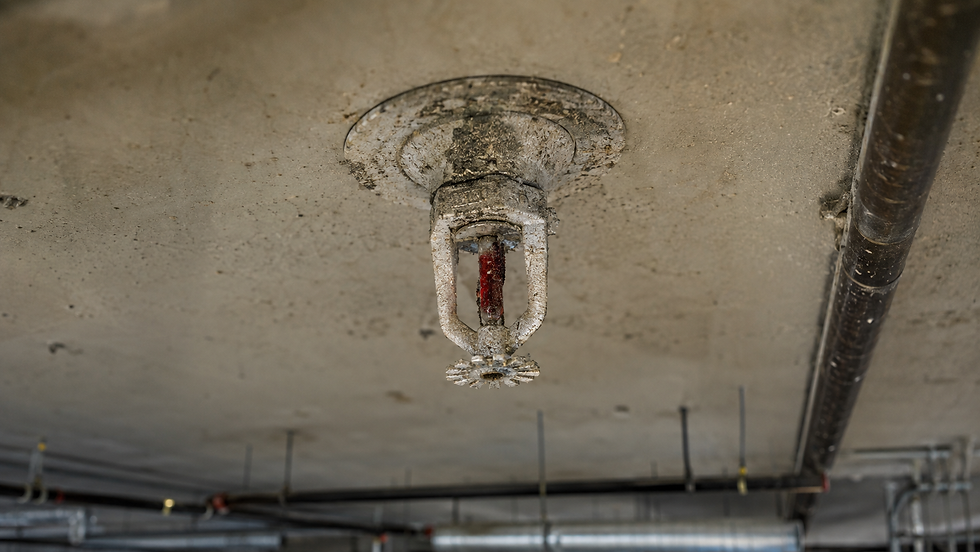
A commercial fire sprinkler system is designed to respond quickly when a fire produces enough heat to activate individual sprinklers. However, dust, dirt, grease, construction residue, and other debris can accumulate on sprinkler components and potentially interfere with their intended performance. For commercial properties in South Florida, where buildings may experience high humidity, active construction, industrial activity, and constant HVAC operation, keeping sprinkler components clean and properly maintained is an important part of fire protection.
NFPA 25 addresses the inspection, testing, and maintenance of water-based fire protection systems and includes visual evaluation of sprinkler condition, including loading that may be detrimental to sprinkler performance. Florida's fire prevention framework incorporates NFPA standards through the Florida Fire Prevention Code.
For property owners, facility managers, condominium associations, warehouses, schools, healthcare facilities, and other commercial occupancies, understanding how contaminants affect sprinklers can help identify problems before they become larger maintenance or compliance concerns.
Quick Answer
Dust, dirt, grease, and debris can affect fire sprinkler performance when they accumulate on heat-responsive elements, deflectors, or other critical components. Significant loading may delay activation, interfere with water distribution, or make a sprinkler ineffective. Regular inspections and qualified maintenance help identify and correct contamination before it compromises fire protection.
What Does “Loading” Mean on a Fire Sprinkler?
In fire sprinkler terminology, loading generally refers to the accumulation of dust, dirt, grease, debris, paint, or other foreign material on a sprinkler to a degree that can be detrimental to its performance.
A small amount of airborne dust does not automatically mean a sprinkler has failed. The important question is whether the accumulated material can interfere with the sprinkler's ability to detect heat, activate, or distribute water properly.
NFPA 25 inspection guidance specifically considers whether sprinklers have loading that is detrimental to performance. NFPA materials describe loading as including dust and debris that can affect sprinkler performance.
This distinction is important because commercial buildings naturally generate airborne particles. Warehouses, workshops, manufacturing areas, construction zones, restaurants, mechanical spaces, and properties undergoing renovation may expose sprinkler components to substantially more contaminants than ordinary office environments.
Common contaminants found on sprinkler components
Potential contaminants include:
Dust
Dirt
Construction dust
Drywall or gypsum residue
Fibers and lint
Grease
Oil
Industrial particulates
Paint overspray
Adhesive residue
Cobwebs
Other airborne debris
The type of contaminant matters because some materials can be removed relatively easily while others may require replacement of the affected sprinkler.
How Dust Can Affect Fire Sprinkler Performance
Dust is one of the most common contaminants found on commercial sprinkler heads.
A sprinkler activates when its heat-responsive element reaches its rated operating temperature. A significant layer of material around that element can alter the thermal environment of the component.
The concern is not simply that the sprinkler looks dirty. The concern is whether the accumulation can insulate the heat-responsive element or otherwise affect the sprinkler's intended operating characteristics.
NFPA 25 explanatory material recognizes that detrimental loading can adversely affect sprinkler performance by interfering with thermal elements, water distribution patterns, or overall operation.
Why dust accumulation deserves attention
A heavily contaminated sprinkler may potentially experience:
Altered heat transfer to the operating element.
Delayed operation.
Impaired water distribution.
Contamination of the deflector or other functional surfaces.
Increased likelihood of being identified as a maintenance deficiency.
The degree of accumulation and the type of material are important. A light coating of ordinary dust is not necessarily equivalent to heavy loading.
Can Dirt Interfere With a Sprinkler's Water Distribution?
Yes. Dirt and debris can become problematic when they accumulate on parts of the sprinkler responsible for producing the intended discharge pattern.
A sprinkler does more than simply release water. Its internal components and deflector are designed to distribute water over a specified area.
If material accumulates on the deflector or other critical surfaces, the discharge pattern may be altered.
That can matter because fire sprinkler design depends on the sprinkler delivering water in the intended pattern and density for the protected area.
Examples of potential problems include:
Obstructed portions of the discharge pattern
Uneven water distribution
Contamination of the deflector
Foreign material attached to the sprinkler
Reduced effectiveness of the designed spray pattern
This is one reason visual fire sprinkler inspection is important. A sprinkler can remain physically attached to the piping while its performance characteristics are being compromised by contamination.
Can Grease and Oil Be More Serious Than Ordinary Dust?
In some commercial environments, yes.
Grease and oil can create a more persistent coating than ordinary dry dust. Restaurants, commercial kitchens, industrial facilities, mechanical areas, manufacturing operations, and other environments may expose sprinkler components to airborne oils or residues.
Unlike loose dust, a greasy substance may not be readily removed through ordinary housekeeping.
The concern is particularly important when contaminants accumulate around the heat-responsive element or interfere with the sprinkler's discharge components.
A qualified fire sprinkler professional should evaluate heavily contaminated sprinklers rather than assuming that every type of residue can simply be wiped away.
Construction Dust Can Create Fire Sprinkler Problems
Commercial construction and renovation projects can generate substantial amounts of airborne material.
Drywall dust, concrete dust, sawdust, insulation fibers, paint residue, and other construction debris can settle on exposed sprinkler heads.
This creates an important distinction between protecting a sprinkler during construction and simply cleaning a sprinkler after contamination has occurred.
Construction teams should coordinate with fire protection professionals when work could expose sprinkler components to dust, impact, paint, or other contaminants.
Areas requiring particular attention include:
Renovated office spaces
Newly constructed commercial interiors
Warehouse improvements
Ceiling replacement projects
Drywall installation
Painting projects
Mechanical renovations
Retail remodeling
Apartment or condominium renovations
Sprinklers should never be treated as ordinary ceiling fixtures during construction.
For properties undergoing renovations, see How Building Renovations Impact Existing Fire Sprinkler Systems for additional information.
What Happens When Paint Gets on a Sprinkler?
Paint overspray is a particularly important issue because paint can affect sprinkler components and is not equivalent to ordinary dust.
NFPA 25 inspection guidance identifies paint other than paint applied by the sprinkler manufacturer as a condition requiring attention, with replacement requirements depending on the applicable provisions and condition.
The safest approach is to prevent paint from reaching installed sprinklers in the first place.
Common causes of sprinkler paint contamination include:
Ceiling painting
Spray painting
Wall painting
Renovation work
Texture application
Accidental overspray
Painting contractors masking sprinklers improperly
A sprinkler should not be scraped, brushed aggressively, or otherwise manipulated by unqualified personnel in an attempt to remove paint.
The heat-responsive element is a precision component. Physical contact can damage the sprinkler or alter its condition.
For more information, see Common Reasons Fire Sprinkler Heads Should Never Be Painted or Modified.
How Cobwebs and Loose Debris Affect Sprinklers
Cobwebs are usually less concerning than heavy grease, paint, or industrial residue, but they can contribute to visible contamination and trap additional dust.
A sprinkler covered by cobwebs may therefore deserve closer evaluation, particularly if the webbing is accompanied by significant dust accumulation.
Loose debris can also become attached to sprinkler components or collect around the deflector.
The important principle is simple:
A sprinkler should remain free of conditions that can interfere with its intended operation or water distribution.
Which Parts of a Fire Sprinkler Can Be Affected?
Contamination can affect different portions of a sprinkler assembly.
1. Heat-responsive element
This may be a glass bulb or another heat-responsive mechanism, depending on the sprinkler design.
The element is critical because it controls activation when the sprinkler reaches its operating temperature.
2. Deflector
The deflector helps shape the water discharge pattern.
Debris or buildup on this component can potentially interfere with water distribution.
3. Frame
The sprinkler frame supports critical components and can accumulate contaminants.
4. Seat and operating components
Contamination or corrosion affecting functional components may create a condition requiring professional evaluation.
5. Escutcheon or cover components
Recessed and concealed sprinkler assemblies have additional components that must remain properly positioned and maintained according to their design.
This is why sprinkler inspection should involve more than simply looking for obvious leaks.
Does Dust Always Mean a Sprinkler Must Be Replaced?
No. The condition of the sprinkler and the nature and severity of the loading matter.
NFPA 25 materials distinguish between conditions that are detrimental to sprinkler performance and situations where limited dust loading may be addressed through an approved cleaning approach. NFPA explanatory material has described cleaning certain dust-loaded sprinklers using compressed air or a vacuum without contacting the sprinkler.
However, this does not mean building personnel should routinely clean sprinkler heads with household tools or chemicals.
The appropriate action depends on:
The contaminant
The amount of buildup
The sprinkler type
The manufacturer's requirements
The condition of the sprinkler
Applicable NFPA requirements
The judgment of the qualified fire protection professional
Requirements of the authority having jurisdiction
If contamination cannot be safely addressed without affecting the sprinkler, replacement may be necessary.
For related information, see Fire Sprinkler Head Replacement: When Is It Required?.
Fire Sprinkler Orientation and Contamination
Different sprinkler orientations can present different inspection considerations.
Sprinkler Type | Installation Position | Typical Consideration | Contamination Concern |
Pendent | Installed below piping with deflector below the sprinkler | Common in many commercial ceiling applications | Dust and ceiling-related debris can accumulate on exposed components |
Upright | Installed above piping with deflector positioned upward | Often used where piping is exposed | Dust, industrial residue, and airborne debris may collect on exposed components |
Sidewall | Installed along a wall | Used where ceiling installation is impractical or where design permits | Wall, ceiling, and airborne contaminants may affect exposed components |
Recessed | Partially positioned within a recessed fitting | Provides a finished appearance while maintaining sprinkler function | Improper trim condition or contamination can require inspection |
Concealed | Installed behind a cover plate | Designed to blend into the ceiling | Cover plates and surrounding construction must remain properly maintained |
The exact sprinkler selection and installation arrangement should always follow the approved design, listing, manufacturer's instructions, and applicable installation requirements.
For more information on sprinkler types, see Pendent vs. Upright Fire Sprinklers: Choosing the Right Installation Type and Concealed vs. Recessed Fire Sprinklers.
Why Commercial Environments Are Especially Vulnerable to Sprinkler Contamination
Different occupancies create different contamination profiles.
Warehouses
Warehouses can generate dust from cardboard, packaging, pallets, forklifts, stored materials, and building operations.
See Fire Sprinkler Compliance for Warehouses and Industrial Facilities for additional information.
Industrial facilities
Manufacturing processes may generate oils, fibers, particulates, and other airborne materials.
Healthcare facilities
Hospitals and medical buildings generally require careful maintenance of life-safety systems while accommodating construction, HVAC activity, and building operations.
Schools
Classrooms, workshops, maintenance areas, and renovation projects can expose sprinkler heads to dust and debris.
Apartment and condominium properties
Renovations, ceiling work, painting, and long-term accumulation can affect exposed sprinkler components.
Commercial offices
Office environments typically generate less industrial contamination, but ceiling renovations, painting, HVAC work, and construction can still introduce debris.
Signs That a Fire Sprinkler May Need Professional Service
Building personnel should arrange professional evaluation when they notice:
Heavy dust accumulation on sprinkler heads
Grease or oil residue
Construction material attached to sprinklers
Paint or overspray on sprinkler components
Corrosion
Physical damage
Leaking sprinklers
Missing or damaged components
Obstructed sprinkler discharge areas
Incorrect sprinkler orientation
Damaged recessed or concealed components
Repeated contamination in a particular area
Sprinklers exposed to unusual industrial contaminants
A sprinkler that appears dirty should not automatically be considered defective, but significant contamination should not be ignored.
Property owners can schedule a fire sprinkler inspection when contamination or other deficiencies are identified.
Common Problems Caused by Poor Sprinkler Maintenance
Dust and debris are often symptoms of a larger maintenance issue.
1. Contamination goes unnoticed
A sprinkler may accumulate material for months or years before anyone recognizes that the buildup is significant.
2. Renovation work damages sprinkler components
Painting and construction can introduce contaminants or physical damage.
3. Building staff attempt improper cleaning
Using brushes, chemicals, tools, or direct physical contact can create additional problems.
4. The source of contamination remains unresolved
Repeated buildup around HVAC diffusers, production equipment, or construction areas may continue unless the underlying source is addressed.
5. Inspection deficiencies are overlooked
Visible loading, corrosion, damage, or other conditions may require corrective action under applicable inspection and maintenance requirements.
For broader maintenance guidance, see Fire Sprinkler Maintenance Guide: What Property Owners Need to Know.
How Fire Sprinkler Inspections Help Identify Contamination
A professional inspection provides an opportunity to evaluate the condition of sprinkler components rather than waiting for a problem to become obvious.
NFPA 25 inspection provisions address conditions including leakage, corrosion, physical damage, foreign material, loading, paint, and proper orientation.
An inspection may identify:
Contaminated sprinkler heads
Damaged sprinklers
Corrosion
Obstructions
Improper orientation
Problems with sprinkler components
Conditions requiring corrective maintenance
The exact inspection and testing requirements depend on the system, applicable edition of NFPA 25, jurisdiction, occupancy, and other factors.
NFPA 25 and Commercial Fire Sprinkler Maintenance
NFPA 25, Standard for the Inspection, Testing, and Maintenance of Water-Based Fire Protection Systems, is a key reference for maintaining water-based fire protection systems.
It is important to understand the difference between:
NFPA 13: primarily addresses the design and installation of sprinkler systems.
NFPA 25: addresses inspection, testing, and maintenance of water-based fire protection systems.
Florida incorporates NFPA standards through its fire prevention regulatory framework. The Florida Administrative Code identifies the Florida Fire Prevention Code and adopted NFPA standards, while updates to the code are periodically developed through the state rulemaking process.
Because adopted editions and local enforcement requirements can change, commercial property owners should verify the requirements applicable to their specific building and authority having jurisdiction.
Florida Fire Code and South Florida Considerations
Commercial properties in Miami, Miami-Dade County, Broward County, Palm Beach County, and surrounding South Florida communities must account for applicable Florida fire protection requirements and local enforcement.
The Florida Fire Prevention Code provides the statewide framework, while local authorities and fire marshals may have responsibilities related to inspection, enforcement, permits, and fire safety.
South Florida properties can also experience building conditions that contribute to airborne contamination, including:
High HVAC usage
Ongoing commercial renovations
Humid environmental conditions
Industrial operations
Construction activity
High-density commercial occupancy
These conditions make preventive maintenance especially important.
OSHA and Workplace Safety During Sprinkler Maintenance
Fire sprinkler maintenance frequently occurs in active commercial environments.
When maintenance requires ladders, lifts, access equipment, electrical-area precautions, or work around other building operations, appropriate workplace safety procedures should be followed.
OSHA requirements may apply depending on the work being performed and the work environment.
For additional context, see The Role of Fire Sprinklers in Meeting OSHA Safety Standards.
Fire sprinkler maintenance should therefore address two objectives:
Protect the integrity of the fire protection system.
Protect workers performing the inspection or maintenance.
Fire protection work should never create an unnecessary hazard for occupants or maintenance personnel.
Common Mistakes to Avoid
Mistake 1: Treating sprinkler heads like ordinary fixtures
Sprinklers are life-safety devices, not decorative ceiling components.
Mistake 2: Cleaning a sprinkler with a brush
Physical contact with sensitive components can cause damage.
Mistake 3: Using household chemicals
Cleaning products are not automatically appropriate for fire sprinkler components.
Mistake 4: Painting over sprinkler heads
Painting during renovation can contaminate critical components.
Mistake 5: Ignoring construction dust
A renovation project can rapidly contaminate exposed sprinkler heads.
Mistake 6: Assuming every dirty sprinkler is acceptable
The degree and type of loading matter.
Mistake 7: Waiting for the next emergency
A sprinkler system should be maintained proactively rather than evaluated only after a fire occurs.
Mistake 8: Correcting sprinkler problems without understanding the system
Replacing or modifying components without considering the approved system design can create additional problems.
Best Practices for Preventing Sprinkler Contamination
Commercial property managers can reduce contamination risks by:
Keeping sprinkler heads visible and accessible where required.
Coordinating construction activities with fire protection professionals.
Protecting sprinklers from paint and overspray.
Addressing recurring dust sources.
Maintaining appropriate housekeeping.
Reporting damaged or contaminated sprinklers.
Including sprinkler condition in facility maintenance procedures.
Keeping inspection and testing records.
Correcting identified deficiencies promptly.
Using qualified fire sprinkler professionals for maintenance and repairs.
Preventive maintenance is generally more effective than waiting until contamination becomes severe.
When to Contact a Fire Sprinkler Professional
Professional assistance is appropriate when contamination is heavy, persistent, or associated with physical damage or other system deficiencies.
A licensed fire sprinkler contractor can evaluate whether a sprinkler should be cleaned, replaced, or otherwise addressed according to applicable requirements.
Professional evaluation is especially important after:
Commercial renovations
Significant construction dust exposure
Painting projects
Industrial process changes
Water leaks
Fire sprinkler damage
Significant grease accumulation
Corrosion
Repeated inspection deficiencies
Changes to building use or occupancy
Active Fire Sprinkler provides commercial fire sprinkler inspection, testing, maintenance, repair, design, backflow inspection, emergency sprinkler repair, and NFPA compliance services throughout South Florida.
Key Takeaways
Dust, dirt, grease, and debris can affect fire sprinkler performance when accumulation becomes detrimental.
Heavy contamination can interfere with thermal response or water distribution.
Construction and renovation projects are common sources of sprinkler contamination.
Paint and certain persistent contaminants require particular attention.
NFPA 25 addresses sprinkler condition during inspection and maintenance.
Not every dusty sprinkler automatically requires replacement; the condition must be evaluated appropriately.
Building personnel should avoid physically manipulating sprinkler components.
Commercial facilities should address contamination as part of their broader fire sprinkler maintenance program.
Florida commercial properties must comply with applicable fire protection requirements and local enforcement expectations.
Professional inspection can identify contamination before it becomes a more serious fire protection concern.
Frequently Asked Questions
Can dust stop a fire sprinkler from working?
Heavy dust accumulation can potentially interfere with sprinkler performance. It may affect heat transfer to the operating element or contribute to loading that is detrimental to performance. Sprinklers with significant contamination should be professionally evaluated.
Does a dusty sprinkler need to be replaced?
Not necessarily. The appropriate action depends on the type and severity of contamination and applicable NFPA requirements. Certain limited dust conditions may be addressed using an approved cleaning method, while heavily contaminated or otherwise impaired sprinklers may require replacement.
Can I clean a fire sprinkler with a rag?
Building personnel should not assume that wiping or touching a sprinkler is safe. Fire sprinkler components are sensitive life-safety devices. Cleaning should follow applicable requirements and manufacturer guidance and should be handled by qualified personnel when necessary.
Can paint damage a fire sprinkler?
Yes. Paint or overspray can interfere with sprinkler components and may require corrective action or replacement depending on the condition and applicable requirements. Preventing paint from reaching installed sprinklers is preferable.
Can construction dust affect commercial sprinklers?
Yes. Drywall dust, concrete dust, sawdust, insulation fibers, and other construction debris can accumulate on sprinkler components. Renovation projects should include appropriate measures to protect fire protection equipment.
How often should commercial fire sprinklers be inspected?
Inspection and testing frequencies are governed by applicable requirements, including the adopted edition of NFPA 25 and local jurisdictional requirements. Property owners should follow the inspection program applicable to their specific system rather than relying on a generic schedule.
Why is sprinkler contamination a fire safety issue?
A sprinkler must activate and distribute water as intended. Contamination that affects its heat-responsive element, discharge pattern, or other functional components can reduce the reliability of the fire protection system.
Are warehouses more likely to have dusty sprinkler heads?
They can be. Warehouses may generate airborne dust from packaging, stored materials, pallets, vehicle traffic, and other operations. The actual contamination risk depends on the building's activities, housekeeping, ventilation, and environment.
Does Florida require commercial sprinkler systems to follow NFPA standards?
Florida's fire prevention framework adopts NFPA standards through the Florida Fire Prevention Code. The specific requirements applicable to a property depend on the adopted code editions, occupancy, system, jurisdiction, and other factors.
Conclusion
Dust, dirt, grease, construction residue, and other debris may seem like minor housekeeping issues, but excessive contamination can become a fire protection concern when it affects sprinkler performance.
Commercial fire sprinkler systems depend on properly selected, correctly installed, accessible, and well-maintained components. A sprinkler's ability to respond to heat and distribute water correctly should not be compromised by preventable contamination.
For commercial property owners and facility managers in Miami, Miami-Dade County, Broward County, Palm Beach County, and throughout South Florida, regular inspection and maintenance are important parts of responsible fire protection management.
NFPA 25 provides the framework for inspection, testing, and maintenance of water-based fire protection systems, while Florida's fire prevention regulations establish the broader regulatory environment for commercial fire safety.
The goal is not simply to keep sprinkler heads looking clean. The goal is to ensure that the fire sprinkler system remains capable of performing its intended life-safety function.
Final CTA
If your commercial property has visible dust, dirt, construction residue, grease, paint, or other material accumulating on fire sprinkler components, consider scheduling a professional evaluation rather than attempting to correct the issue yourself.
Active Fire Sprinkler is a licensed fire sprinkler contractor serving South Florida with more than 25 years of experience in commercial fire sprinkler installation, inspections, testing, maintenance, repairs, system design, backflow inspections, emergency sprinkler repairs, and NFPA compliance services.
Property owners and facility managers can contact Active Fire Sprinkler to schedule a fire sprinkler inspection, request a compliance evaluation, or obtain professional guidance for sprinkler maintenance and repairs.


Comments